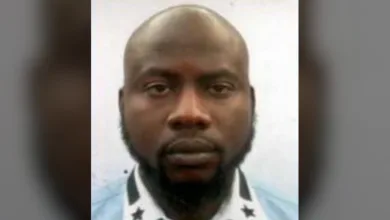
Nigerian National Sentenced to 95 Months in Prison for Laundering $3.1 Million in Scam Proceeds

WASHINGTON, Aug. 28, 2026 — The U.S. Department of Justice announced that a Nigerian national has been sentenced for leading an international money laundering conspiracy that funneled millions of dollars in proceeds from fraud schemes targeting American citizens, according to a press release from the department’s Office of Public Affairs.
Oluwasegun Baiyewu, 40, of Houston, Texas, was sentenced Thursday, Aug. 27, 2026, to 95 months in prison — just under eight years — for his role in a conspiracy to commit money laundering. According to court documents, Baiyewu laundered proceeds tied to a range of fraud schemes, including business email compromise (BEC) scams, romance scams, and unemployment insurance fraud.
How the Scheme Worked
Court documents show Baiyewu led a conspiracy that laundered more than $3.1 million in illicit proceeds. The group laundered the money by purchasing used cars with the proceeds and then shipping those cars to West Africa.
Between approximately May 2020 and October 2021, Baiyewu worked with at least six other co-conspirators in the United States and Nigeria. Using encrypted messaging applications such as WhatsApp, Baiyewu and his co-conspirators coordinated the receipt and use of illicit money to purchase salvaged cars, which were then shipped to Nigeria.
The Puerto Rico Case
In one instance, Baiyewu conspired to launder funds obtained from a business email compromise scheme carried out against a Puerto Rican renewable energy company. The company was tricked into wiring approximately $280,000 to bank accounts controlled by fraudsters and money launderers. Baiyewu then worked with his co-conspirators to launder the company’s money by paying toward the purchase of cars located in the United States, which he arranged to export and ship to Nigeria to benefit the co-conspirators.
A federal jury convicted Baiyewu in August 2025 of one count of conspiracy to commit money laundering.
Part of a Broader Crackdown on Cyber-Enabled Fraud
The case was investigated as part of the Justice Department Criminal Division’s Cyber-Enabled Scam Initiative (CSI), which works to disrupt and stop cyber-enabled criminal networks that prey on Americans. CSI brings together prosecutors from across the Division to accelerate the prosecution of cyber-enabled financial crimes, including investment and crypto scams, government imposter schemes, romance and inheritance scams, financially motivated sextortion, and lottery and sweepstakes scams, among other predatory schemes. With nationwide jurisdiction and global reach, CSI says it uses every available tool to dismantle criminal operations, pursue offenders, recover criminal proceeds, and obtain justice for victims.
The Criminal Division partners with U.S. Attorney’s Offices across the country and is a founding member of the Scam Center Strike Force, launched in November 2025 by Jeanine Ferris Pirro, U.S. Attorney for the District of Columbia.
Investigation and Prosecution
The case was investigated by the U.S. Postal Inspection Service, the U.S. Department of Labor Office of Inspector General, and the FBI San Juan Cyber Task Force, with assistance from the National Unemployment Insurance Fraud Task Force, which supports COVID-19 Fraud Enforcement Strike Force teams.
Trial Attorneys Emily Powers and Richard Greene of the Criminal Division’s White Collar and Corporate Enforcement Section, and Assistant U.S. Attorney Linet Olinghouse for the District of Puerto Rico, prosecuted the case.